
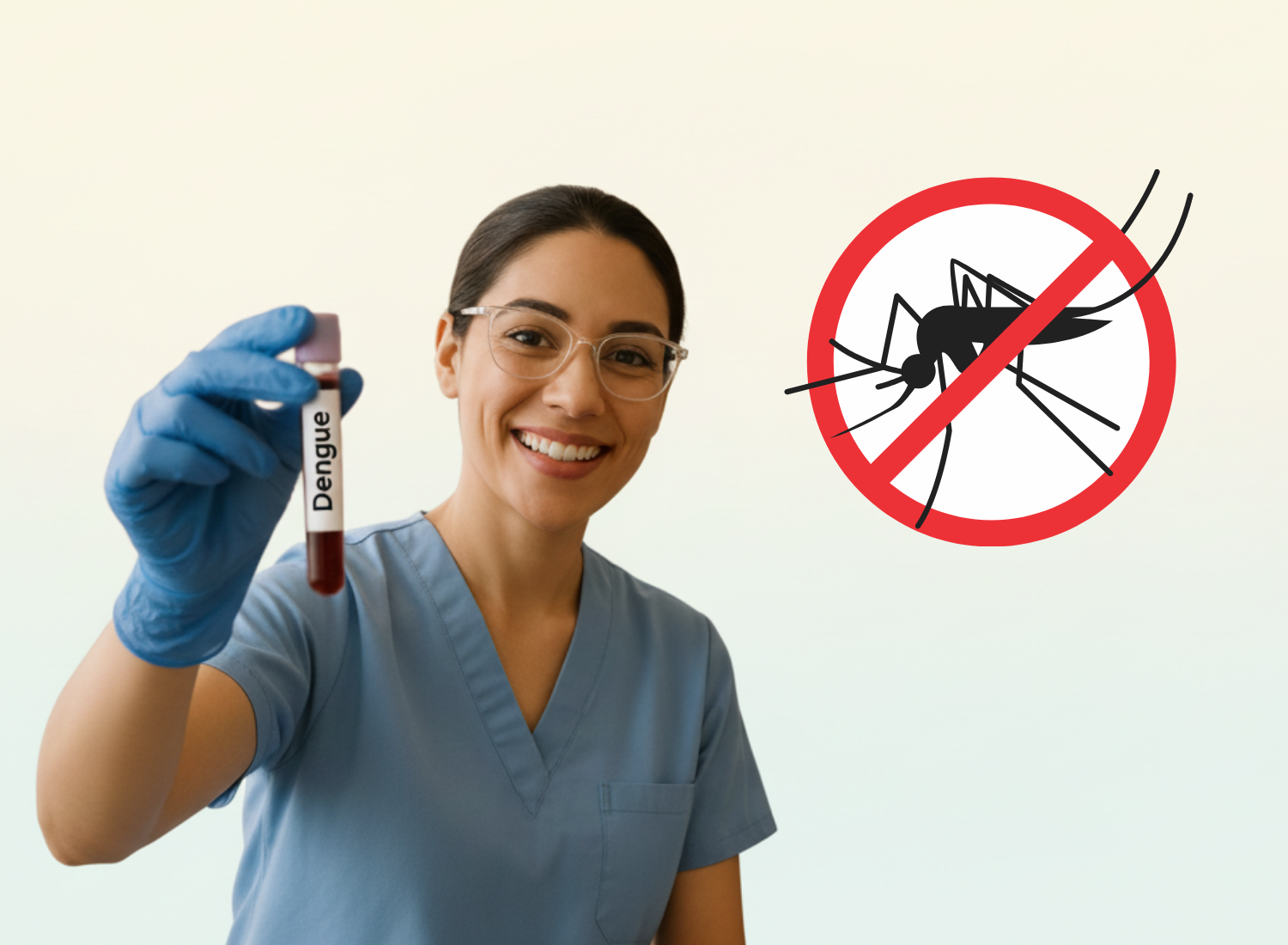
Risk areas, prevention, diagnosis, and what to do if you get infected
What is dengue and how to recognize it?
Dengue is a viral disease transmitted through the bite of the Aedes aegypti mosquito, a small, household-dwelling insect that thrives close to people.Unlike other mosquitoes, it reproduces in containers with clean, standing water, such as vases, buckets, plant pots, or empty bottles. It is quiet, small, and usually bites during early morning and late afternoon.
There are four types of dengue virus (DENV-1, DENV-2, DENV-3, and DENV-4), which means a person can get infected up to four times in their life, one per type. While all types can cause mild or severe illness, serotypes 2 and 3 are linked to more severe cases.
Initial symptoms usually appear 4 to 10 days after the mosquito bite. They often start suddenly with high fever (39–40 °C), headache, pain behind the eyes, muscle and joint pain, nausea, or rash. Sometimes these symptoms resemble a common flu, which can delay diagnosis.
Although most cases are mild, some people can develop severe dengue, a more dangerous form that requires urgent medical attention. Warning signs include severe abdominal pain, persistent vomiting, bleeding, difficulty breathing, or extreme fatigue. Recognizing these early can be life-saving.
Dengue in Argentina
In Argentina, dengue is no longer just a summer problem. In recent years, the mosquito has remained active almost year-round, even in areas where it previously disappeared during the cold season.
Since its reemergence in 1997, Argentina has experienced several major outbreaks, but 2023 and 2024 marked a turning point. According to the National Epidemiological Bulletin No. 717 (Ministry of Health, 2024), between January and August 2024, over 560,000 dengue cases were reported, which equals about 1.2% of the Argentine population. The most common serotypes were DENV1 and DENV2, and the most affected provinces included Tucumán, Formosa, La Rioja, Santa Fe, and Rosario, where the virus circulated strongly.
During the winter of 2025, cases decreased, but the mosquito never disappeared completely. Health authorities warn that it remains present in nearly all the country, keeping the risk of new outbreaks high. For the 2025/2026 season, transmission is expected to be moderate, though localized outbreaks could occur if conditions are favorable: heat, rainfall, and standing water provide an ideal environment for mosquito reproduction.
Dengue has a strong seasonal pattern: cases usually increase between November and May, when heat and humidity are higher, and decrease during cold months. For this reason, monitoring is done seasonally rather than by calendar years.
How dengue is transmitted (and how to prevent it)
Dengue cannot be transmitted from person to person; the only way it spreads is through the bite of an infected Aedes aegypti mosquito. This mosquito feeds on human blood to reproduce, and if it bites someone with the virus, it becomes capable of transmitting it for life.
Its life cycle is very fast, and eggs can develop in just a week if there is standing water and warm temperatures. Environmental conditions, such as heat and humidity, are crucial for increasing cases during spring and summer.
Preventing dengue mainly depends on avoiding mosquito breeding sites and preventing bites. Some simple but effective measures include:
- Emptying and cleaning containers with standing water (vases, buckets, pet bowls, gutters).
- Covering water tanks and disposing of unused objects that can collect water.
- Using insect repellent during the day and night, especially on legs and ankles.
- Installing screens or mesh on doors and windows.
Additionally, since 2023, dengue vaccination has been available in Argentina. It can be administered at authorized institutions such as public hospitals or vaccination centers, both public and private. Vaccination does not replace preventive measures, but it reduces the risk of severe disease in case of reinfection. If you live in or travel to high-risk areas like Tucumán, Formosa, La Rioja, Santa Fe, or Rosario, ask your doctor if you are eligible for vaccination.
Confirming a dengue diagnosis: blood tests
If you suspect dengue, the most important step is confirming it with a blood test. While symptoms can guide the doctor, laboratory tests are the only way to know for sure if the virus is present.
At any clinical laboratory or laboratory analysis of blood, different tests can be performed depending on the stage of illness:
- NS1 antigen test: used in the first days of fever (day 1–5). Detects a viral protein, so a positive result confirms active infection.
- Serology (IgM and IgG): used after more than 5 days of symptoms. Detects antibodies produced by the body to fight the virus.
- Positive IgM indicates a recent infection.
- Positive IgG may indicate a past infection or reinfection.
- Complete blood count (CBC): does not confirm dengue alone but provides useful information. Low platelets and white blood cells support the suspicion of dengue.
If you have fever or active symptoms, while you could go to a laboratory for testing, SaludyVos offers blood tests at home, allowing you to rest while a professional comes to your home for the extraction. This also reduces the risk of mosquito bites during travel, which helps prevent spreading the virus to others. This option provides comfort, convenience, and public health protection.
What to do if your result is positive
Receiving a positive dengue result can be worrying, but the most important thing is to stay calm and follow medical advice. Most cases resolve with rest Receiving a positive dengue result can be worrying, but the most important thing is to stay calm and follow medical advice. Most cases resolve with rest and proper care at home, as long as there are no warning signs.
- Rest and stay hydrate:
Your body needs energy to recover. Drink plenty of water, natural juices, or electrolyte drinks to prevent dehydration, especially if you have a high fever or loss of appetite. - Do not self-medicate:
Avoid ibuprofen, aspirin, or any medication that can affect blood clotting, as dengue can lower platelets and increase bleeding risk. For fever or pain, paracetamol is safer. - Monitor your progress with blood tests:
After the initial diagnosis, your doctor may request follow-up blood tests to track your recovery. These may include:- Complete blood count (CBC): monitors platelets and white blood cells. In dengue, these often decrease, and monitoring is usually done every 24–48 hours until normal hemogram values are restored.
- Liver profile: checks liver function, which can be affected during infection.
- Kidney profile: ensures proper kidney function, especially if dehydration occurs
- .Coagulation profile: analyzes how blood clots, important if bleeding or bruising occurs.
These tests allow your doctor to closely follow your evolution and prevent complications. Most people recover within one to two weeks, but rest, hydration, and monitoring are essential until all values return to normal.
Recovering from dengue: returning to daily life
Recovering from dengue may take time, even after the fever subsides. Many people feel weak or tired for several days, which is normal. Here are some common questions and guidance:
How long does recovery take?
Most patients improve within 1–2 weeks after symptom onset. However, fatigue may last longer in some cases. Listen to your body and avoid rushing back to your routine.
Why is it important to follow up with blood tests?
Even if you feel better, follow-up blood tests, such as CBC and coagulation studies, are essential to ensure all blood parameters have returned to normal hemogram values. These checks also help detect potential complications in the liver or kidneys.
How do hydration, nutrition, and rest help recovery?
Following a light and nutritious diet, rich in fruits, vegetables, broths, and fluids, is key to helping your body recover. Avoid heavy or highly processed foods. Constant hydration with water, natural juices, or electrolyte solutions helps maintain your body’s fluid levels and supports recovery.
Additionally, getting enough rest allows your body to focus its energy on fighting the virus and regaining strength.
When can I safely return to work or exercise?
After the fever subsides, avoid returning to intense activity immediately. Start with short walks or light tasks and gradually increase your workload. Follow-up blood tests confirming that platelets and CBC values are normal indicate that it is safe to resume your routine.
Conclusion: prevention is still the best tool
Dengue is not a minor illness. While most cases resolve without complications, each outbreak highlights the importance of prevention and early action.
Avoid mosquito breeding sites, use repellent, and consult a doctor at the first symptoms. If you need to confirm the diagnosis or monitor recovery, blood tests at a trusted laboratory or even home blood tests with SaludyVos make it convenient and safe.
Taking care of yourself also protects others: the sooner dengue is detected, the easier it is to control its spread. Information, prevention, and medical follow-up are the best tools to face dengue and return to daily life safely.